Table 2 gives the sound absorption coefficient at various frequencies for the basic fiber board, as well as the (estimated) Access Factors for the perforated metal, and finally the effective sound absorption coefficients for the composite structure:
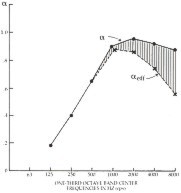
Table 2: Effect of perforated metal sheet with a low value of TI on the absorption coefficients for glass fiber board.
Freq 125 250 500 1000 2000 4000 8000
a 0.18 0.40 0.65 0.90 0.95 0.92 0.88
AF 1.0 1.0 1.0 0.98 0.90 0.75 0.49
Comparing a and aeff (see sketch), it is evident that the perforated metal covering is hindering the sound absorption at high frequencies. But this may not be a serious drawback, if there is not much high-frequency energy in the spectrum to be controlled in the first place.
Other acoustical applications that use large quantities of perforated metals as facings for sound absorptive treatments include subway tunnels and stations, and street and highway tunnels. Since all of these treatments are trying to cope with noises having broadband spectrums, the acoustical design approach should be the same in all cases: namely, the Transparency Approach. (See Section IV).


